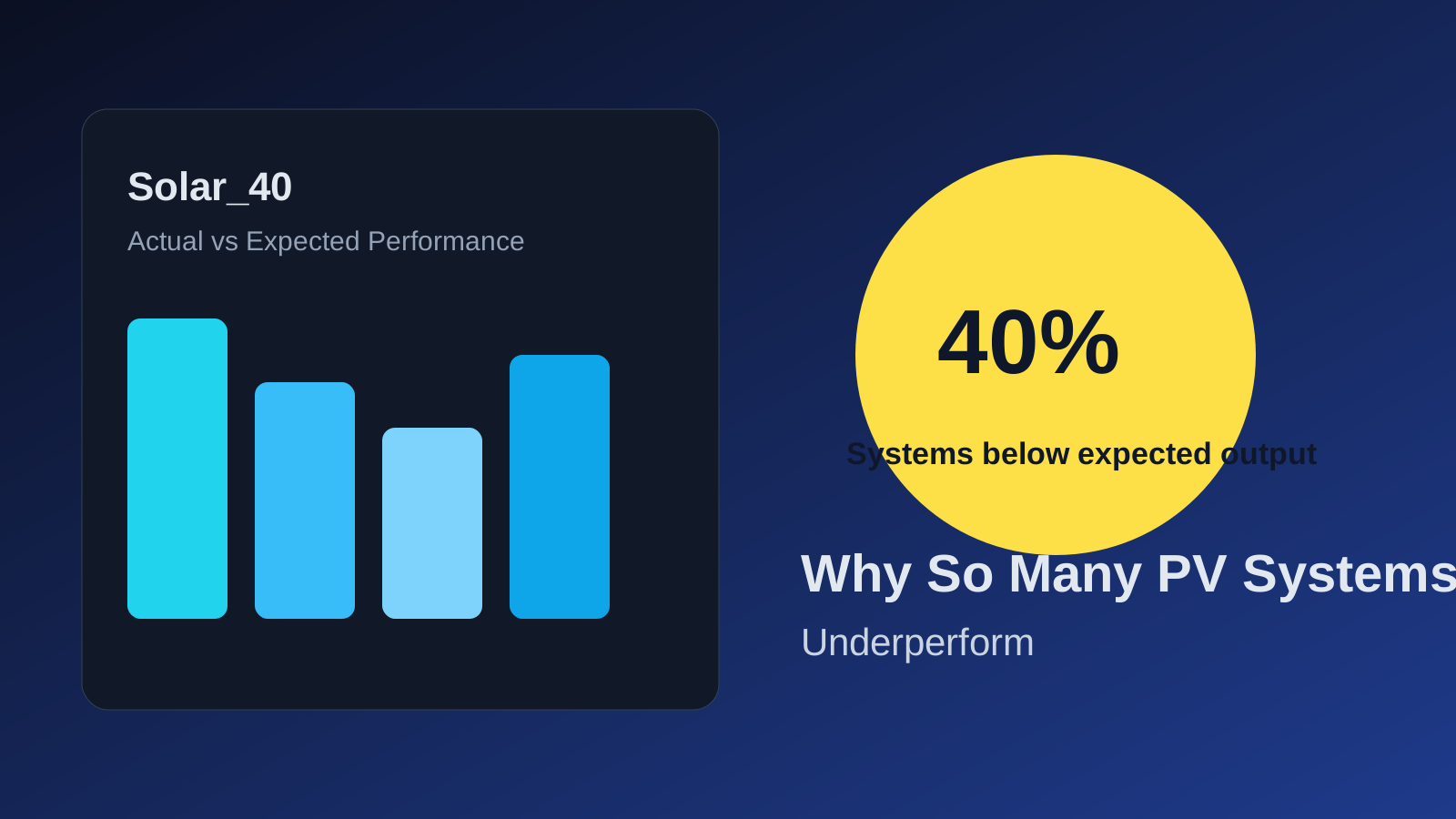

PV losses usually do not come from rare, catastrophic failures. More often, they result from recurring operational issues that appear small in isolation but become expensive when left unresolved.
The fastest way to improve yield is to identify these recurring patterns and respond before they become long-term drift.
1) Soiling and contamination
Dust, pollen, agricultural residue, and airborne particles can produce measurable and persistent yield penalties, especially during dry periods. The key variable is not only soiling level, but soiling rate at each site.
Typical signal: gradual decline, partial recovery after rain, widening mismatch between similarly exposed strings.
2) Dynamic and partial shading
Shading evolves over time as vegetation grows or nearby structures change. Even partial shading can heavily affect string output and create unstable daily patterns.
Typical signal: repeated drops at similar hours or seasons, asymmetry across strings.
3) Connectors, cables, and micro-faults
Poor connector mating, cable wear, and localized thermal stress create “silent” losses: the plant keeps running, but below its potential.
Typical signal: localized hot spots, intermittent warnings, current imbalance that does not trigger full shutdown.
4) Inverter operating constraints
Thermal derating, outdated firmware, unsuitable setpoints, and poor ventilation can continuously reduce conversion efficiency.
Typical signal: stable but persistently low output compared with expected benchmarks.
5) Installation quality and execution details
Minor installation defects (torque quality, cable routing, weather protection) often become recurring operational faults.
Typical signal: repeated interventions in the same subsystem or physical area.
Prioritization framework
For each anomaly, classify:
- expected energy impact;
- urgency from technical and safety perspective.
This avoids spending resources on visible but low-impact issues while high-value recoveries remain unattended.
Conclusion
Most PV losses are diagnosable and recoverable. With structured monitoring, root-cause classification, and impact-based prioritization, operators can capture substantial performance gains without major redesigns.